
(Previously published in the Columbia Regional Business Report)
By James T. Hammond
“Give me your tired, your poor,
Your huddled masses, yearning to breath free,
The wretched refuse of your teeming shore,
Send these, the homeless, tempest tost to me,
I lift my lamp beside the golden door.”
The verse by Emma Lazarus, inscribed on the Statue of Liberty, sounds a little hollow these days, and the lamp dimmed, with our governor and both our U.S. Senators clamoring to close the door to the tragic victims of the war in the Eastern Mediterranean. The welcome light seems especially dimmed with the daughter of immigrants, Nikki Haley, trying to snuff it out.
It is worth noting that the Democrat who opposed Haley for election twice, Sen. Vincent Sheheen, is the grandson of Syrian immigrants. Syrian/Lebanese descendants are almost too numerous to count in the Carolinas, including a former speaker of the House, former members of the state Senate, and numerous business leaders and owners.
It’s always been tough for people who are “different” to find acceptance on the shores of America. But millions have tried and made it, spawning new generations of loyal and productive Americans.
For decades, Congress sought to exclude Chinese immigrants from settling here. What fantastic Americans they have become. Irish flooding into New York were despised by many who arrived earlier. Japanese Americans, many born in this country, were imprisoned during World War II. And many of those joined the U.S. Army to prove their loyalty to this land.
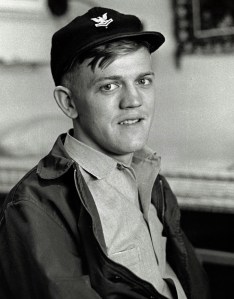
In 1904, Lutfallah Jarjoura Saad left his homeland in the Mt. Lebanon region of Syria with two other young men. They probably boarded a ship bounded for Southern France, and traveled overland to the channel port of Le Havre. We know they traveled by ocean liner to the Canadian port of Quebec, where they boarded a train bound for the United States. Their path is witnessed by the ocean liner’s passenger list and a border crossing document when their train crossed into the United States. He was 19 years old and had $22 when he arrived in the United States of America.
They joined thousands of other Syrian immigrants to work in a shoe factory in Lawrence, Mass. Lutfallah married another Syrian immigrant, Rosa; they relocated to the small North Carolina town of Selma; they had a large family and almost two dozen grandchildren. Among them are a police officer, a State Department Foreign Service officer, a school teacher, a high-tech computer industry entrepreneur and several journalists. I married one of those journalists. One of Lutfallah’s great-grandchildren today is a cadet at the U.S. Air Force Academy.
Others among the Saad descendants served in the American armed forces; worked as a civilian working with the U.S. Army Corps of Engineers; became small town business owners; worked in home construction; and directed of a homeless rehabilitation center. Great-grandchildren include a lawyer, more journalists, a playwright, a parks administrator, a city councilman, two musicians, a teacher, a banker.
If Lutfallah had not been allowed to settle in this country, I would not have the family whom I cherish. Lutfallah was typical of thousands of Syrians who came to this country seeking a better life. He may also have come to escape conscription into the army of the ruling Ottoman Empire, which ruled that region in 1904. Lebanon had not yet been carved out as a separate country, and today many of the descendants of these self-identifying Syrians called themselves Lebanese Americans. Or maybe just Americans.
If Syrians had not been allowed into this country in 1954, the father of Steve Jobs may have been excluded, and there might never have been the Apple Computer Co.
We all know people whose grandparents came to this country from the eastern Mediterranean to ensure the fruits of America for their children.
People who agree with Emma Lazarus that we should welcome people fleeing persecution or looking for a better life on these shores need to speak up against the gathering darkness so evident in our times. While it is reasonable to expect our government to carefully screen people seeking to enter our country, we must raise our voice against intolerance and exclusion.
Creating a process in which people longing to be free and safe can come to America is more than just a moral imperative. The absence of such a policy is in effect criminalizing large sectors of our economy. One of the hardest hit by the failure of Congress to deal with the immigration issue is agriculture.
Farmers today struggle to find people who will work in the fields, to harvest and process the food that ends up on our tables. Because most South Carolinians today will not do the work, the farmers turn to contractors who bring in immigrant labor. And because there is no legal path for many of those workers to obtain proper documents to work here, those contractors turn a blind eye to undocumented people who yearn to work in these essential farming activities.
It is tragic that so many otherwise respectable farming family enterprises have essentially been criminalized by the failure of Congress to act.
Our current legal immigrant admissions process is more than rigorous. I accept that there must be a high bar for admission to our country in difficult times such as these. But it should not be impossible.
James T. Hammond can be reached by email at jthammond46@gmail.com.
 @RestlessBoomer